Showing posts with label Christina Forney. Show all posts

Monday, March 21, 2011

Chris's Day


This Saturday was Chris's last day in Malta before he left to rejoin his family in San Luis Obispo. Chris really wanted to visit a place on Malta that he had not been before during this, and his previous visits. So, looking through our guidebook, he stumbled upon Golden Bay.


Golden Bay is a small inlet with a sandy beach, small waves, and a great place to go snorkeling. Despite the looming clouds, snorkeling took place by some, while half of us, me included, decided to lay out on the beach enjoying the sunshine while it was still around. Zoe and Tyler dug a big hole - which Tyler decided to sit in. Later, Tyler and Andy went exploring - ending up on the top of large overhanging cliff to the right of the beach, while Joe, Zoe, and I fell asleep, napping in the sun.


After the snorkelers got back, we all went on a short hike up to the top of the overhanging cliff on the left side of the beach where an old abandoned watch tower stood. We then hiked up the hill further to some more abandoned buildings.


After watching the clock closely we headed back down to the bus stop to catch the last bus out of the area at 5:05 pm - and as usual, it was Mr. Toad's wild ride the whole 30 minute ride back to Sliema.


Everyone was happy and tired getting back to the apartment - a very needed restful day, full of exploring and good times.

Friday, March 18, 2011

Inspiring the Next Generation - Teaching Robotics

Part of the ICEX goals this year have been reaching out to elementary school aged children and introducing them to robotics and inspiring them to go into science and technology fields. During the quarter back at Cal Poly, we visited two different 2nd grade classrooms at Pacheco elementary school every Wednesday. We switched off between the classrooms and had hands-on lessons that talked about design, testing and programming. It was very successful. The kids seemed to really enjoy it and retain a lot of what we taught. We even got a book of thank you notes written by all the students afterward – a nice touch.

Originally, that was going to be the extent of our outreach. At the suggestion of Timmy though, we packed a suitcase full of little robots so we could continue the lessons at several Maltese grade schools. We started off with a brief lecture about different types of robots and introduced the robots we brought and the paper disks used to program them.

The disks we used were small circular pieces of paper (that we had to individually cut out beforehand). The robots have two sensors that read the disk as it rotates and determines if the 2 rows of squares are black or white. Depending on the combination of black and white, the robot will go forward, stop, or turn left or right.

We then broke the students into groups of 3-4 and let them each “program” the robot to navigate a simple maze we created on the floor with tape by coloring disks with black pencils and pens. Overall, the students were very excited about it and there were several students who even inquired about where they could get their own robot so they could do more on their own.

It was encouraging to be so enthusiastically received by both the students and faculty of the schools and in addition to being a good educational experience for the students there, it was a great experience for the ICEX team as well to be able to talk with so many students (who represented a variety of ethnic backgrounds).

Thursday, March 17, 2011

Failure (Almost) to Launch

Today we launched the AUV in Pembroke. It took a couple trips in Timmy's smaller car to get the AUV, and all 10 of us out to the coast. We were all excited to get in the water (Chris was the most enthusiastic), and had planned ahead by wearing our swimsuits. We were especially excited about the AUV's first launch in the Mediterranean. Our plan was to take the AUV out to about 10 meters from the water line, just past the big rocks. We would then let it go out on its first mission to a waypoint approximately 100 meters off of shore. It was then supposed to turn around, and come back to a final stopping point of 60 meters off shore. This was mostly what happened.


Our first problems started when we had trouble transferring files for the mission from the toughbook to the AUV's hard drive. We were finally able to get them transferred after many debugging attempts, resets, and reboots. It was at this point that we were ABANDONED by Chris, as he had to go off to give a talk at the University of Malta (which he reportedly rocked). Next, we had trouble with the IVER (AUV) connecting to its instruments. This was solved by another reboot of the IVER. We finally had success! Time to launch that robot.


Tyler and Jeff got into the water and Andy, Billy, and Brig brought the IVER to the water's edge. I had a nice view from up on a large rock where we had placed the Wifi box. Tyler and Jeff swam the IVER out and the rest went according to our initial plan. BUT THEN! IT STOPPED! So, it turns out, we over estimated the distance from the coast, and when the IVER came to rest it was too far to establish a Wifi connection so we could not manually drive the IVER back. As the IVER started drifting away in the current, we realized we needed to send a rescue mission. Since Tyler and Jeff were already in the water, they were sent to go after it. It was very exciting watching them bring the IVER back, especially when the waves started getting bigger. In the end, we successfully launched and completed a mission - even though it wasn't quite what we had expected. Hooray for success!


Zoe showed the initiative and went for a quick swim and then we all followed suit (except Billy and Andy).


Too bad Timmy wasn't around for the rescue mission, he could have used his super reach to pick it up right out of the middle of the sea!

Monday, March 14, 2011

Jane's Day

Saturday the 12th was Jane's final day on Malta, so of course, we had a full day of exploration so that she (and us too!) could get maximum tourist action in a limited time. Our plan started out with an ultimate goal: to go and visit the Blue Grotto on the South Shore of Malta. We had read that visiting the Blue Grotto early in the morning was the most beautiful and most rewarding. As we began to plan our trip on Friday evening, a large list emerged: St. John's Co-Cathedral, Ħaġar Qim and Mnajdra Temples, the Blue Grotto, the Azure Window, shopping in Valletta... It soon became clear we had a lot on our plates and some changes would need to be made. Even though we had all hoped to go to the Blue Grotto to see the sunrise, we decided that making it to the St. John's Co-Cathedral was the most important thing to make considering it had a time constraint of being open for visiting from only 9:30am to 12pm, and since the temples and the blue grotto were across the island we could visit them second without the worry of making it back to see the cathedral.

We started our day by heading to Valletta to see the Co-Cathedral, we had been told by many people that the painting of the beheading of John the Baptist by the painter Caravaggio. The cathedral was spectacular, but I was most impressed with the story of Caravaggio and his paintings that lined the Oratory. After a few hours we hopped on another bus and headed towards the Blue Grotto.


The bus ride was a little bit longer, and we were able to see quite a bit of the Maltese countryside. We anticipated passing through the Blue Grotto to get to the temples, however, we must have mis-interpreted the map, because we arrived at the temples a stop earlier. After stopping by the cafe for a delicious pastizzi and coffee we went down to the temples. These temples were much larger than the Ggantija Temples we visited last week, and were more modern as well. It was still incredible to see such an incredible feat of architecture accomplished so so long ago.


After our long walk down to the second temple closer to the coastline we walked up to a nearby restaurant serving "authentic Maltese food." We ate a wonderfully tasty, and a little bit late lunch, joined by a few friendly cats who enjoyed some good attention from our table. Jane ordered a Maltese octopus dish, and the rest of us ordered various versions of pasta dishes. By the time we finished our lunch it was nearing the time the last bus would come by this area. We decided it was in our best interest to hop on this last bus to Valletta. We were all satisfied by our adventures for the day and headed back to the house. Although we didn't accomplish our initial goal, we had a wonderful day seeing many sites in Malta and got to spend a very awesome day with Jane before she left. We were all very sad to see her go, she always had interesting facts to tell us about the places we visited! Oh, and we liked her company too ;) Thank you Jane for all your wonderful conversations, insight, interesting debates, great planning, and never ending enthusiasm - you made our first two weeks here incredible.


Tuesday, March 8, 2011

The Legend of the Pygmy Hippo

A long, long time ago time ago a magnificent species walked the earth. It was found only on a small island in the Mediterranean, the island of Malta. Long separated from its mainland parents these animals evolved having a unique trait, they were 1/3 the size of their parents. These were in fact, pygmy hippos. Known as Hippopotamus melitensis, they stood only 80 cm high. Plagued by the incidence of insular dwarfism, evolution of a smaller species due to land restriction, their isolation has made them unique. Having first arrived on the land we now Malta by crossing the land bridge during the ice age, they became isolated once this disappeared. These hippos existed during the Pleistocene (2,588,000 to 12,000 years BC), long before the building of the oldest stone structure in the world, the Ggantija Temples, found on the island of Gozo.

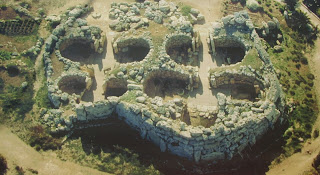
We were privileged enough to explore these temples on Tues, March 8th. The temples themselves had something in common with the hippos - they were much smaller in person than they appeared in pictures. Constructed to represent the earth mother, the two temples consist of multiple round open rooms. The pictures of these temples show these multiple circular rooms for worship - an intriguing pattern when viewed from above. This construction is an incredible feat as some of the larger stones weigh many tons, and were assembled to their present position through human strength and early innovation.


I was most impressed with how well these structures have held up considering they were built 5,800 years ago. Despite the wearing of the stone, and age the of evidence (and removal to museum sites), the unique features were still visible even to my untrained eyes. I could see how the location was a place of peace, offering a beautiful view overlooking the island, tall green grass all around, and an amazingly beautiful structure to offer up worship. I would have loved to find a small area of the temple to curl up and read a good book, enjoying the clean air and sunshine.


It is unfortunate that the people who built the Ggantija Temples did not have a chance to interact with the pygmy hippos as they became extinct long before evidence of any human life on Malta. However, these magnificently small animals were companioned on the island by another small creature - the pygmy elephant, Elephas falconeri, whose story is similar to that of the hippo, and stood only 90 cm high.


We were first told about these unique creatures during Timmy's visit to San Luis Obispo, CA. He warned us, "Watch out! You might see them roaming the land." Little did I know, it is only Timmy who has the power to awaken the ancient species. As I began to visualize these two species, a vision of epic hippo and elephant battles danced in my head. Now, I'm not going to lie - even though I knew it was never possible - I had high hopes for seeing these elephants and hippos roaming through the streets of Valletta, or tromping through the countryside. And to my disappointment - I have yet to see any hippos or elephants.

Saturday, March 5, 2011

Mdina, Round 1

Our site for Wednesday was within the walled city of Mdina (http://en.wikipedia.org/wiki/Mdina). The first cistern was located in a restaurant called Bacchus, which was not open for the day yet.
This caused our time for exploration to be slightly shortened, as we had to be out before they opened. After arriving, during setup and some of the time spent in the cistern, about half of the team was able to wander around the restaurant with the owner getting a bit of a history lesson. There was much history to discuss since the room was built between 1657 and 1660! Since it was before business hours, many people transporting supplies for Bacchus were filtering in and out of the front entrance where we were located. Many stopped momentarily to see what we were doing, and were very interested in our sonar maps of the underside of the restaurant as well as the images we were receiving from the VideoRay.


In an effort to rotate drivers during different sites, Christina watched closely as I drove the VideoRay through this site so she could become familiar with the logging process and hopefully gather useful data. After gathering data for awhile, the ToughBook lost communication with the control box. After a quick bit of unsuccessful troubleshooting, it was about time to leave, so we headed to the next location.

The next spot was The Mdina Experience, right down the street. There was very limited space here, and it was during normal business hours.


There was actually a tour group passing right through our site when we arrived. They watched as we brought in and setup all of our equipment, but weren't interested enough to ask any questions. We switched to the Samsung backup since we thought the problem was with the ToughBook and did not have time to continue troubleshooting it on-site. Slightly different connections had to be made when using the Samsung, since it lacked a serial port, but everything worked out and we got the VideoRay through the small entrance and into the water.

Space was limited, so team members not directly involved couldn't really be present, so exploration presented itself again!

Another restaurant was our final location of the day. The cistern here was located in the basement. We had to walk through the restaurant which caused for some further stares of the other patrons. There was an extremely narrow passageway leading down to the site, and our equipment had to make it carefully down the long staircase. To add a bit to difficulty, the passageway was lined with wine bottles so there was little room for error. Luckily, Tyler and I made it all the way down successfully.

After making it downstairs and setting up, the data collection process began. Christina drove for for the first time on this site, and did an awesome job grabbing sonar scans and video for the cistern we were on top of. This cistern was composed of a large circular room and a narrow hallway that didn't lead to anything. We ended our day here, and loved the view off the balcony behind the restaurant!

Friday, March 4, 2011

The Most Interesting Man in the World


Timmy Gambin - "The Most Interesting Man in the World"


From the start we all loved Timmy. Tyler said "from the moment I laid eyes on him I knew he was amazing." We have all continued to be amazed by this incredible man. From his seemingly endless knowledge to his striking resemblance to "the most interesting man in the world" in the Dos Equis commercials often seen in CA, Timmy Gambin may actually BE the most interesting man in the world.


Today we went to the hardware store a few blocks up from the street we are staying on, Howard's Hardware Shop looking for more plug converters (we have been battling over the handful we have - we are trying to avoid resorting to violence), an extension cord (sometimes 20 meters isn't enough), a surge protector (we blew up the one we brought from the US - our power learning curve has been slow), a large trashcan (to help test the depth sensors for the ROV), a hair dryer (apparently it is more expensive to buy a transformer than a new hairdryer), and an exacto knife (to avoid toxic fumes from melting apoxy).

It was at this hardware store we discovered Timmy's expansive amazingness - the two men in the hardware store both knew him well. An even more amazing discovery: one of the men in the hardware store was the original author of the first paper published about the cave we will be exploring next week. Timmy really must be incredible to have these connections everywhere we go.

It didn't take long for the complements to start:
"Timmy created Chuck Norris jokes for the attention to be takin off of him"
"Timmy doesn't need a bow-flex, so he gave it to Chuck Norris"
"Timmy touched me today and my spider bite was instantly healed - he is that amazing"
"Timmy doesn't need to do laundry - he just blows on his clothes and they are instantly sterile"
"Timmy doesn't need to trim his perfect beard because he efficiently re-directs the proteins to other parts of himself"
"Timmy knows everything"
"Timmy didn't just write down history - he IS history"


As you can see, we are very impressed with our archeological and spiritual guide here in Malta. He has been wonderfully accommodating, providing guidance, history, and insight into the culture of Malta. We are looking forward to spending more time with him over the course of the next 3 weeks. We love you Timmy!

Thursday, February 17, 2011

Research Project Discussion at Backstage - 2/15/11

So I got one picture...

Hopefully it's an okay summary of our meeting with Timmy Gambin and the awesome insights he was able to give into our individual research projects and also just some useful general knowledge about Malta.

Can't wait to talk with him more!

Thursday, February 10, 2011

Tourism shapes industry - Abstract

The development of a country is often measured through the success or lack thereof of the industrial sector. Through continued dependence on foreign support Malta failed to develop in industry and technology until after its independence in 1964. In addition, industrial growth has been limited by the lack of natural resources available on the island - water and energy are limited. By considering the natural resources available, the history of industry on the island, and analysis of its current economic status, the impact of tourism on the country can be assessed. In Malta, tourism is an important economic contributor and has shaped the more recent industrial development. Tourism is important to the island of Malta given how industry has been formed around it, however, this has been a detriment to the islands technological development. These detriments can be seen through the struggle with natural resources of water and oil, the absence of manufacturing prior to 1959, and the absence of a unique industrial field.
Locations of Site Visitors